

If you have natural stone tile in your home or business, there’s a good chance you’ve heard the word “sealing” before.
But here’s the thing most people don’t realize:
Tile sealing isn’t about making your floors shiny. It’s about preventing problems you don’t see… until it’s too late.
Stains, dark spots, grout discoloration, and that “why does this always look dirty?” feeling usually come down to one thing – unprotected stone.
Let’s talk about why sealing matters, when it’s needed, and what actually happens if it’s ignored.

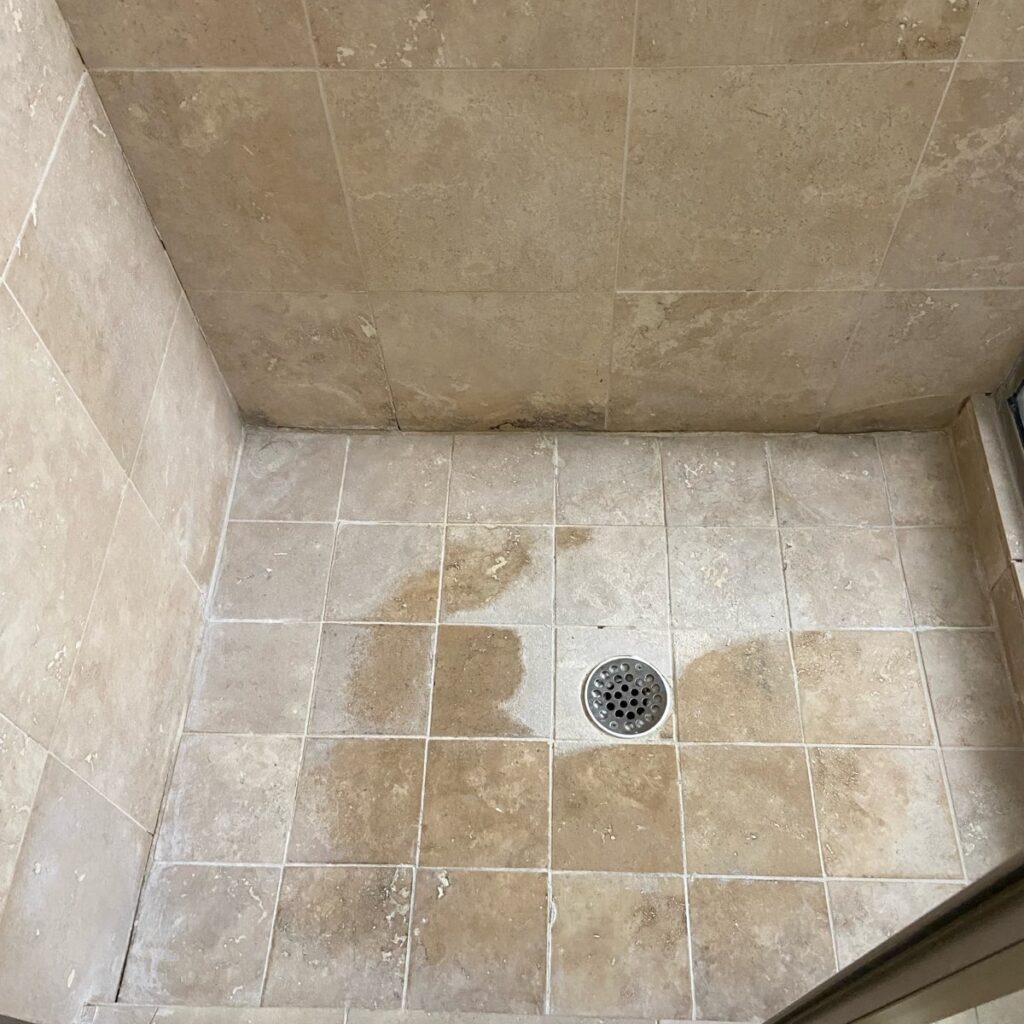
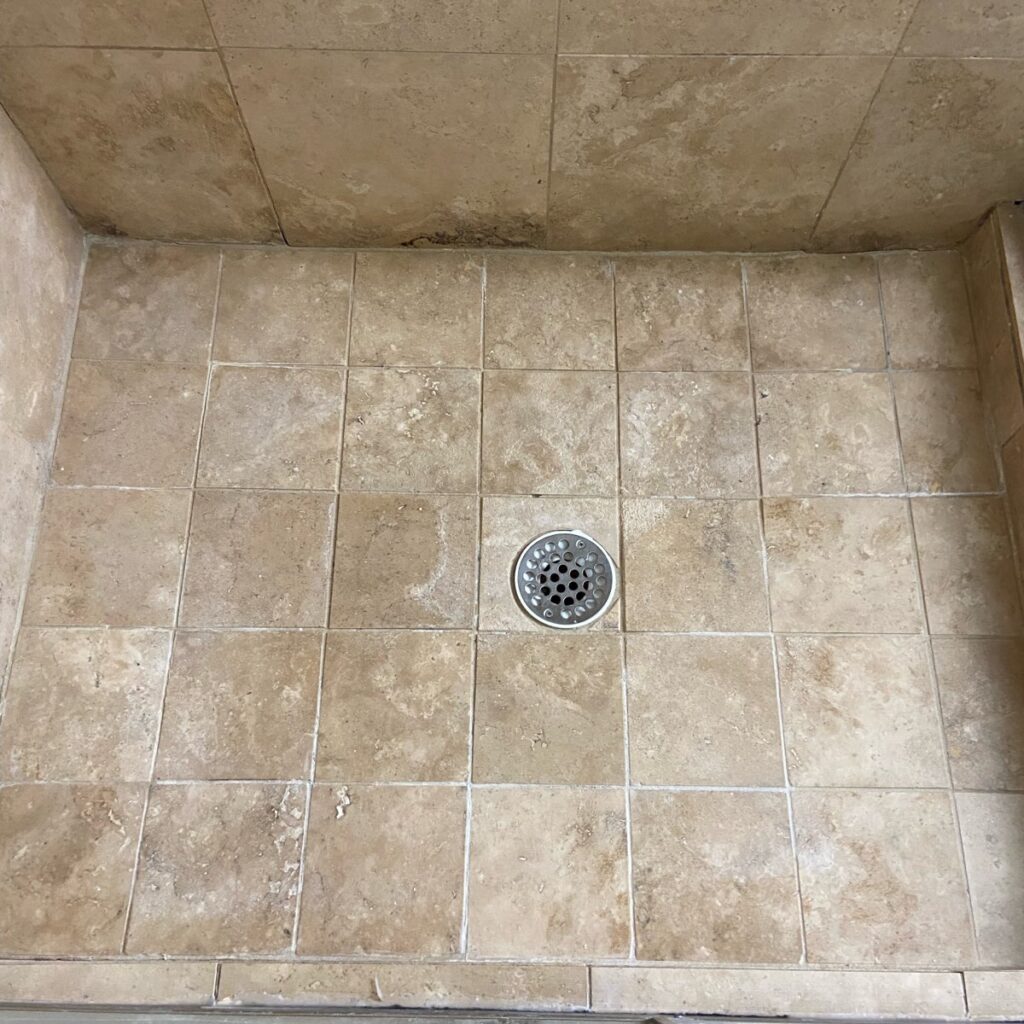
Why Stone Tile Behaves Differently Than Regular Tile
Natural stone isn’t like ceramic or porcelain. It’s formed in the earth, not manufactured in a factory – which means it has tiny pores and natural variations throughout the surface.
Those pores:
– absorb liquids
– trap oils and dirt
– hold moisture
– and collect residue over time
Even if you clean regularly, unsealed stone slowly absorbs whatever lands on it. That’s why:
- kitchen floors darken near cooking areas
- bathroom stone discolors around sinks and showers
- entryways develop traffic patterns
- and grout never quite looks clean again
It’s not poor cleaning. It’s poor protection.
The Most Common Problems We See on Unsealed Tile
When we inspect stone floors that haven’t been properly sealed, the issues are usually very consistent:
1. Permanent Staining
Water, coffee, wine, cooking oils, and cleaning products can soak into the stone and leave marks that won’t come out with regular cleaning.
2. Darkened or Blotchy Areas
Moisture gets trapped in the stone and grout, causing uneven coloring that makes floors look dirty even when they’re not.
3. Grout That Never Stays Clean
Unsealed grout absorbs everything – dirt, soap, grease, and moisture. Over time, it darkens and becomes harder and harder to restore.
4. Accelerated Wear
Without protection, stone surfaces dull faster and break down more quickly under foot traffic.
These aren’t rare issues. They’re what we see every day.

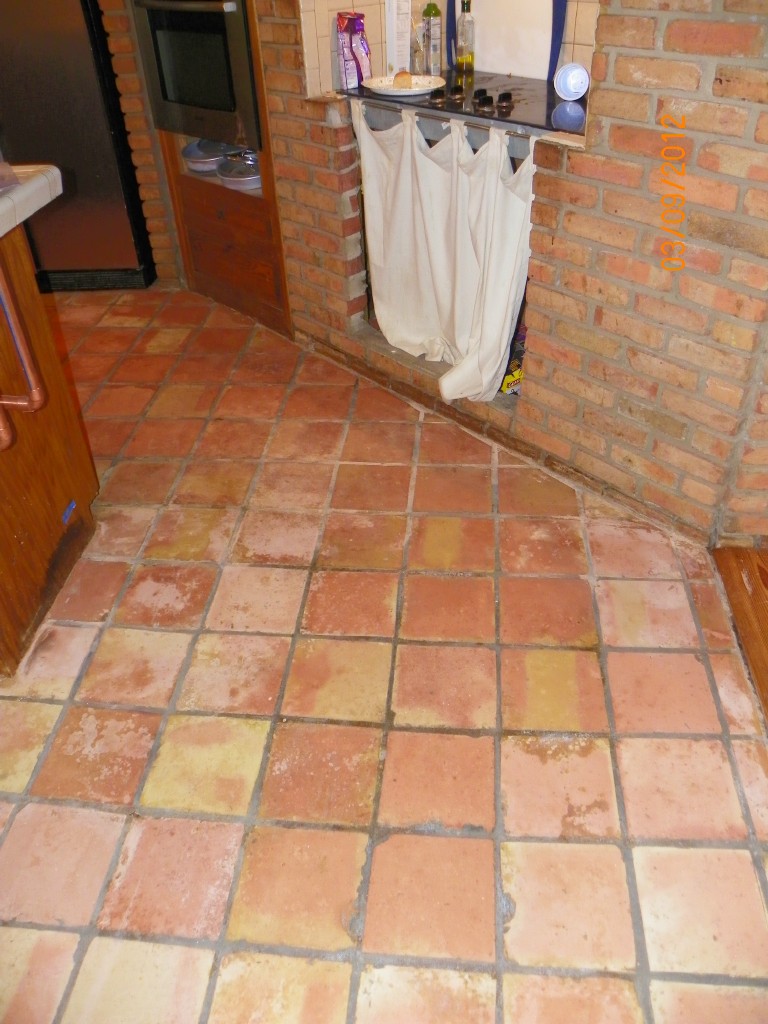
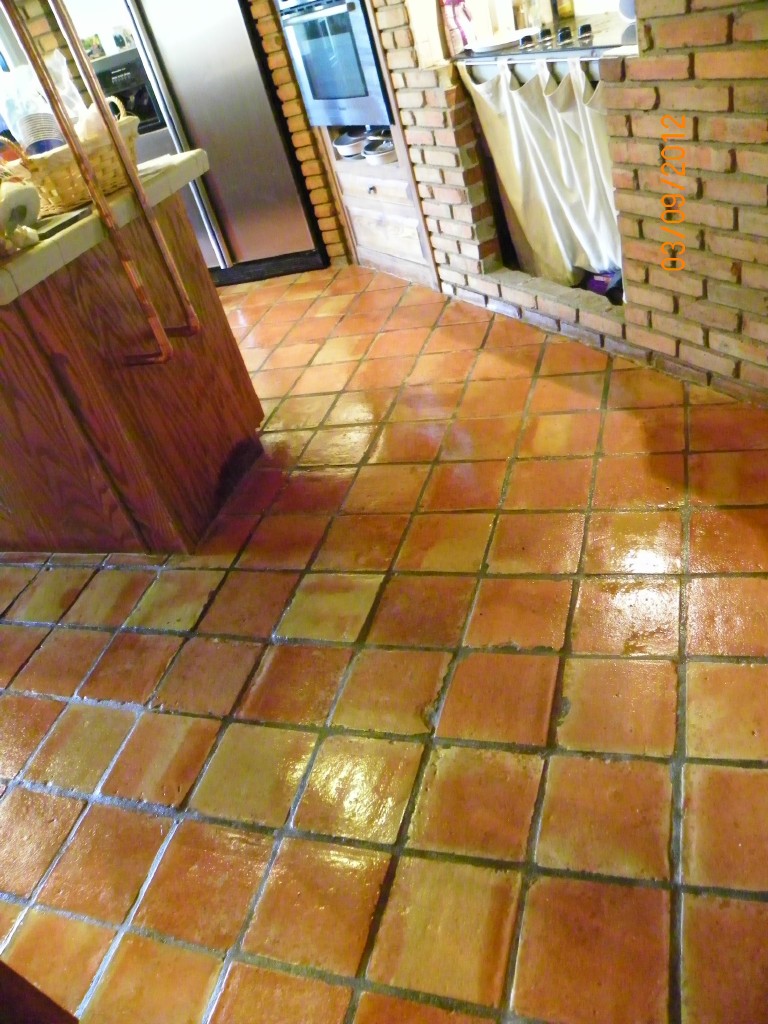
Why Grout Is Usually the Bigger Problem
Most people focus on the tile – but grout is often the real troublemaker.
Grout is extremely porous. It absorbs moisture and contaminants faster than the stone itself. When grout isn’t sealed (or the sealer has worn off), it:
• darkens quickly
• stains easily
• holds moisture
• and becomes a breeding ground for bacteria and mildew
If your tile looks okay but the grout always looks dirty, sealing is almost always the missing piece.
When Is the Right Time to Seal Tile?
There’s no single answer, but here are the most common situations where sealing is needed:
• After new tile installation
• After deep cleaning or restoration
• When grout darkens quickly after mopping
• When spills soak in instead of sitting on the surface
• When the stone starts to look dull or uneven
If water no longer beads on the surface, the protection is likely gone.
What Professional Sealing Actually Does
This is important:
A proper seal does not sit on top like a wax. It penetrates into the stone and grout to create a protective barrier below the surface.
That barrier:
• slows absorption
• resists staining
• repels moisture
• and makes regular cleaning easier
The result isn’t a “coated” look – it’s a more consistent, cleaner, easier-to-maintain surface.
Why Professional Sealing Matters
Sealing is not just “apply product and walk away.”
Before sealing, the surface needs to be:
• properly cleaned
• free of residue and buildup
• and completely dry
If you seal over dirt, oils, or moisture, you lock those issues in.
Professional sealing ensures:
• the right product is used for your specific stone
• even coverage across tile and grout
• and long-lasting protection, not patchy results
That difference shows over time.
Tile Sealing Is Preventive, Not Reactive
Most people call us after the damage is done:
• stained floors
• dark grout
• uneven color
• or stone that “just won’t clean up”
Sealing is what prevents those calls.
It’s much easier (and more affordable) to protect stone than to restore it after it’s been compromised.
Why Homeowners and Businesses Trust Cleaner Image Marble
At Cleaner Image Marble, we don’t take a one-size-fits-all approach to stone. Every surface is different, and every space has different demands.
We look at:
• the type of stone
• how the area is used
• traffic levels
• moisture exposure
• and existing condition
Then we recommend the right approach – not the fastest one.
With decades of experience in natural stone care, we focus on doing things correctly, not quickly.